


Top 10 studios building product visualizers for B2B manufacturers
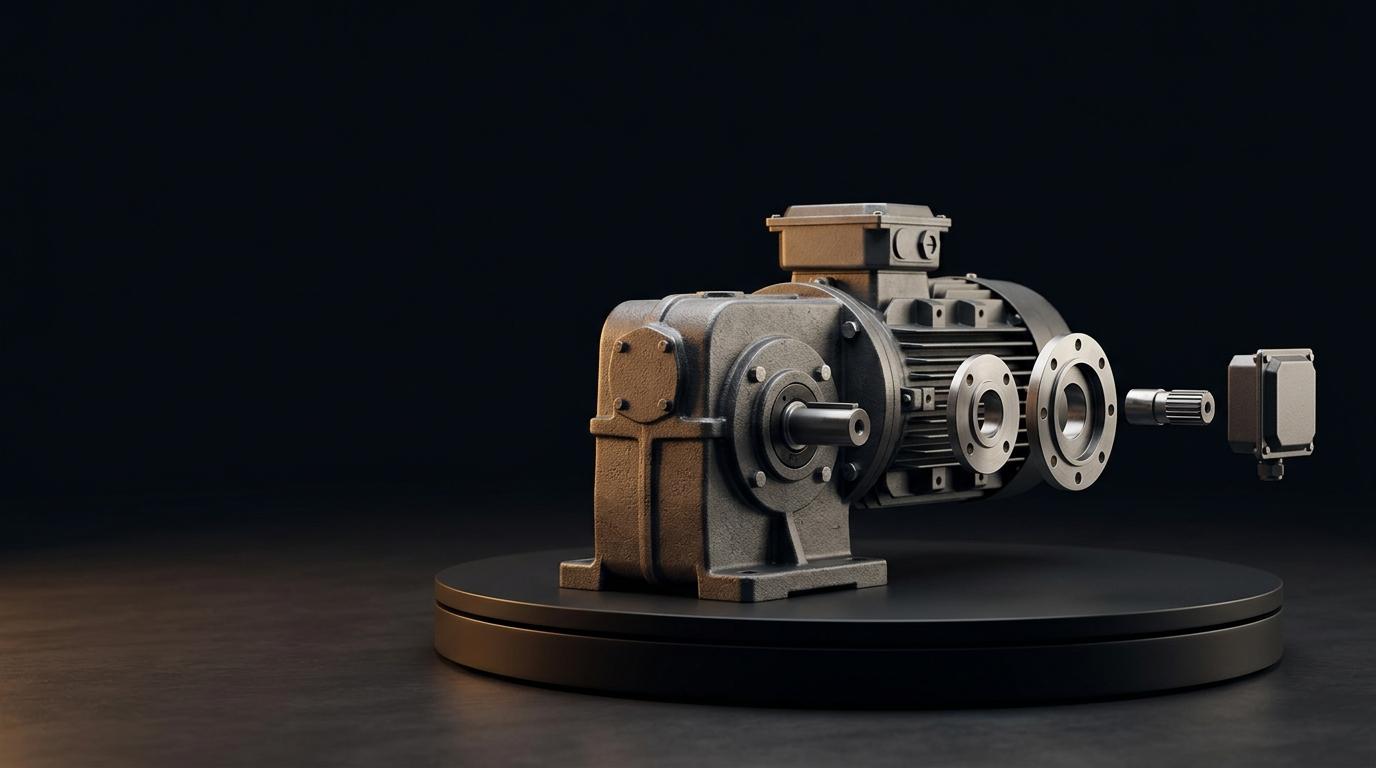
The short answer: hire a platform when the pipeline already exists, a studio when it does not
If your manufacturer already runs a CPQ or ERP and needs a 3D front end that reads from it, hire a platform vendor such as Threekit, Expivi, Epicor CPQ or Tacton and budget for integration work rather than modeling. If the harder problem is turning native CAD into web-ready models, look at Zea Inc or VNTANA first. If the visualizer has to fit a workflow no platform anticipates, or you want to own the code, a custom studio such as Salsita or the Culver City team at position four is the better fit, and the published entry-level brackets sit around $10,000–$50,000. The reason the choice matters this year: 67% of B2B buyers now say they prefer a rep-free buying experience (Gartner, 2026 survey of 646 B2B buyers), and a visualizer is the part of your site that has to do the rep's job.
How this list was built: the criteria, and what was deliberately ignored
Every vendor below was checked against its own website on September 20, 2026, and against its Clutch listing where one exists. A company qualified only if its site shows real work for a manufacturer, meaning a product with a bill of materials, a dealer or distributor channel, or a quote step between the visual and the order. Consumer-only ecommerce visualizers, no matter how polished, were left out.
The ten are ordered by fit to a specific job: putting a configurable, engineered product in front of a B2B buyer and connecting what the buyer sees to what the factory builds. That means order is not by company size, revenue or headcount. A five-person CAD-to-web specialist can rank above a CPQ vendor with a thousand employees if the specialist solves the visual half of the problem better. The Culver City studio sits in the middle of the list for the same reason: it fits the custom-build job well but has a shorter track record than the vendors founded in the 2000s.
Three things were deliberately ignored. Funding rounds and valuations, because they say nothing about whether a rule engine handles your product's exclusions. Award badges and "top agency" listings, because most are pay-to-play. And any performance claim that could not be tied to a named source with a year, which is why the numbers in this article come from Gartner, McKinsey, Clutch, GoodFirms and a handful of vendor case studies labeled as such.
Where a company does not publish a budget or timeline, the table says "not published." Nothing in this article is estimated. If a field says "per Clutch listing" or "per company site," that is the only source for the figure, and you should re-check it before you sign anything, because pricing pages change without notice.
Comparison table: ten vendors by focus, published budget, timeline and region
| # | Company | Focus | Budget range | Timeline | Region |
|---|---|---|---|---|---|
| 1 | Threekit, Inc. | 3D/AR visual configuration and CPQ platform for manufacturers; AI sales agent layer | Not published | Not published | Chicago, IL, USA; London, Ottawa, Paris, San Francisco |
| 2 | Zea Inc | CAD and business data into web digital twins, configurators and parts catalogs | Not published | Not published | Montreal, Canada |
| 3 | Expivi | 3D configurator with CPQ and ERP integration, API-first | Not published | Not published | Netherlands |
| 4 | Todor3D | Custom WebGL, Three.js, React Three Fiber and WebAR builds; custom software; AI solutions | $10,000–$50,000 / $50,000–$100,000 / $100,000–$250,000+ (per company site) | 4–10 weeks / 3–6 months / 4–12 months (per company site) | Culver City, CA, USA; engineers on three continents |
| 5 | VNTANA | Enterprise 3D asset management: CAD conversion, optimization, publishing to web and AR | Custom enterprise licensing by storage and live models (per company site); figures not published | Not published | Van Nuys, CA, USA |
| 6 | Salsita | Custom 3D configurators with dealer quoting, pricing and CAD/BOM output | Three tiers named; prices not published | Not published | Prague, Czech Republic; Ostrava; Atlanta, GA, USA |
| 7 | Epicor CPQ | Visual CPQ (2D/3D/AR) with rules engine and CAD/drawing automation | Not published | Not published | Americas, Europe, ANZ (HQ not stated on product page) |
| 8 | Tacton Systems AB | CPQ and buyer-engagement platform for complex configured products | Not published | Not published | Stockholm, Sweden; Chicago, IL, USA; Germany |
| 9 | Cadesign form | CGI studio: product images, films, configurators, digital showrooms, BIM/CAD files | Not published | Not published | Denmark / Nordics |
| 10 | Markovate Inc. | Custom generative and agentic AI; CAD blueprint classification and quotation automation | From $50,000; $50–$99/hour (per Clutch listing) | Not published | San Francisco, CA, USA |
Two things stand out in the table. Only two of ten vendors publish a project budget at all, so the general Clutch benchmark is the best reference for the others: the most common software project on the directory costs $10,000–$49,000, and US firms most often bill $50–$99 per hour (Clutch pricing guide, data updated September 2026, from first-party client reviews). The second is regional: seven of ten have a US office, but the CAD-native specialists cluster in Canada and Europe, which matters if you want working hours that overlap with your engineering team.
The ten vendors, by the job each one fits
1. Threekit, Inc.
Threekit is a Chicago platform for 3D and AR product configuration that has repositioned its homepage around an "AI sales agent": a buyer describes what they need, the agent turns it into a valid configuration and a quote through the manufacturer's existing CPQ, ERP or commerce system. The company dates its history to 2005, with the current founding team joining in 2016, and its site lists Salesforce CPQ, Oracle CPQ and Configure One integrations, ISO 27001 certification and 150+ manufacturers live. One of the founders, Ben Houston, is described as a Three.js contributor, which shows in the rendering quality.
Representative projects on the site are Andersen Windows & Doors, Sloan and Ulrich Lifestyle Structures, with logos for Kohler, Bobcat, Milwaukee and Steelcase. Threekit's own figures for those accounts, such as 4× faster quoting at Sloan, are vendor data with no baseline disclosed (Threekit homepage, 2026), so treat them as anecdotes rather than benchmarks.
Pick Threekit when you have a large catalog, an enterprise CPQ already in place and the budget to run a platform subscription plus an integration project. Do not pick it if you need a small, self-contained visualizer for one product line; pricing is not published, and the platform is built for scale you may not have yet.
2. Zea Inc
Zea Inc, based in Montreal, builds its products on its own WebGL engine and describes the job in one line: turning CAD and business data into interactive digital twins that serve the whole product cycle, from production through sales, documentation and after-sales. The product set follows from that: configurators, interactive parts catalogs, technical illustrations, a CAE visualizer called SimStream and a data layer called Zea Cortex. The pitch is that the same CAD-derived model can sell the machine, then document it, then help order the replacement part.
Published success stories are Trebro, Motrec and Taiga Motors, all equipment or vehicle manufacturers, which is the right kind of reference for this list. Pricing and timelines are not published.
Pick Zea when your bottleneck is CAD itself: assemblies with thousands of parts, frequent engineering changes, and a service organization that needs the same model the sales team uses. It is the vendor on this list most clearly aimed at the after-sales catalog problem. Do not pick it if what you actually need is a lifestyle-quality rendering for a marketing page; that is a CGI job, and Cadesign form or a custom studio will get there faster. Its published footprint is Canadian, so ask about support coverage for US time zones and about who does the CAD cleanup on your side.
3. Expivi
Expivi, based in the Netherlands, calls itself an all-in-one product configuration platform: 3D visualization, CPQ and ERP integration in one system, exposed through an API-first, headless architecture. The integration list on its site is unusually specific for this category: Magento, Salesforce, Sana Commerce, SAP, Shopify, Shopware and WordPress. That list is the tell that Expivi expects to sit between a storefront and a back office rather than replace either.
The representative projects are the useful part. Eduard trailers runs more than 100,000 combinations through the configurator, Crocs uses it for custom shoes with automatic hand-off to manufacturing, and Kimberly Clark uses it to generate automated print files. Logos include Big Green Egg, Kingspan and Ralph Lauren. Pricing is not published.
Pick Expivi when the configuration output has to become a manufacturing instruction, not just an order line, and when your commerce stack is one of the platforms it already connects to. Do not pick it if your product is engineered to order with rules that live in spreadsheets and engineers' heads; a platform can only encode rules you can already write down, and the discovery work to extract them is not what a SaaS vendor is set up to do. That discovery is where a custom studio earns its fee.
4. A Culver City studio that publishes its budget brackets
Todor3D is the custom-engineering entry on this list, and this studio is one of only two vendors here that publish project budgets: $10,000–$50,000, $50,000–$100,000 and $100,000–$250,000+, with matching timelines of 4–10 weeks, 3–6 months and 4–12 months. Founded in 2020, the studio lists 40+ engineers across three continents, 300+ delivered projects, and 25 reviews with a 5.0 rating on Clutch. The stack is WebGL, Three.js, React Three Fiber and WebAR/WebXR, and the practice areas are 3D & Immersive, Custom Software Engineering and AI Solutions, with a presence in Culver City, California.
The work listed on its homepage is a closet configurator in the $10K–$50K bracket delivered in four months and a jewelry configurator in the same bracket. No industrial client names are published, so for a manufacturer the relevant question is whether the team has done rule-heavy configuration before, and the closet project is the closest published proxy: modular components, dimensional constraints, a price that changes with every choice.
Pick the studio when no platform fits your workflow, when you want to own the code and host it yourself, or when the visualizer has to talk to an internal system through an API nobody else supports. The lowest bracket is realistic for a single product line with a few dozen options and a simple price model. Do not pick it if you need a licensed platform with a support desk and a roadmap. Note also that a 2020 founding date means a shorter track record than the vendors on this list that date to the 1990s and 2000s, so ask for references in your industry before committing.
5. VNTANA
VNTANA, headquartered in Van Nuys, California, and founded in 2012, does not build configurators. It solves the step before them: enterprise 3D digital asset management that converts, optimizes and publishes CAD and 3D files to web, AR and marketplaces automatically. The input list reads like an engineering department's file server: Siemens NX, SolidWorks, AutoCAD, Revit, Creo, CATIA, STEP, IGES and JT. The outputs are the web formats, GLB, USDZ, USD, FBX, OBJ and STL, and the integrations include PTC Windchill, Centric PLM, Amazon, Home Depot, Lowe's, Bynder and Brandfolder. The company reports SOC 2 Type II.
Case studies name Bobcat and Kohler, both manufacturers whose catalogs run to thousands of SKUs. Pricing is described as custom enterprise licensing scaled to storage and the number of live models, with a free trial; no figures are published.
Pick VNTANA when you already have a viewer or configurator, or plan to build one, and the real cost is the hundreds of CAD files that need to become lightweight, consistent web assets on a schedule. The size problem is real: the median web page weighs about 2.6 MB on desktop (HTTP Archive Web Almanac, 2024), and a single unoptimized CAD export can exceed that many times over. Do not pick VNTANA if you have ten products and no PLM; a studio can hand-optimize ten models for less than an enterprise license.
6. Salsita
Salsita, based in Prague with offices in Ostrava and Atlanta, builds custom 3D product configurators and packages the offer in three complexity tiers it calls Bell Pepper, Jalapeño and Habanero. Prices for the tiers are not published, but the tiering itself is useful: it signals that the studio has scoped enough configurators to know where the cost jumps. Its configurator page describes self-service buyer configuration, dealer quoting, real-time pricing and CAD or BOM output, which is exactly the chain a B2B manufacturer needs.
Named work includes L'Atelier Paris, Kilo, Easysteel, Middleby, Azenco Outdoor, Siemens and Moduline, a mix of equipment, outdoor structures and kitchen manufacturing. Easysteel is presented with case metrics on the studio's site.
Pick Salsita when you want a custom build with dealer-facing quoting from day one, and a team that has already made the CAD/BOM hand-off work for someone else. The Atlanta office helps with US contracting and hours. Do not pick it if you expect a self-serve platform you can administer without engineers; a custom configurator is code, and someone has to maintain it, which agencies typically budget at 15–25% of the build cost per year (GoodFirms app cost survey, 2026).
7. Epicor CPQ
Epicor CPQ, formerly KBMax, is the configure-price-quote product inside Epicor's manufacturing software portfolio. Its visual side covers 2D, 3D and AR configuration driven by a rules engine, and its distinguishing feature for manufacturers is CAD and drawing automation: a configured product can generate AutoCAD, SolidWorks or PTC Creo output and production drawings. Integrations listed are Salesforce, Teamcenter, Magento and MuleSoft, through REST APIs.
Customer stories on the product page include NanaWall Systems, Johns Manville, Advanced Drainage Systems, Graceland Portable Buildings and iKon Boats. Epicor's own claim that visual configuration "boosts conversion rates by up to 40%" is vendor marketing with no methodology (Epicor product page, 2026). A more grounded figure comes from an analyst case: Nucleus Research reported a 53% ROI and 2.4-year payback for manufacturer CMTP on Epicor CPQ (Nucleus Research, 2024), and CMTP itself says quote turnaround went from about two days to minutes (Epicor customer quote, 2026).
Pick Epicor CPQ when you already run Epicor ERP or need drawings generated from the configuration, not just pictures. Do not pick it if your priority is visual fidelity on a marketing site; the 3D is functional, and pricing and headquarters are not published on the product page, so expect an enterprise sales process before you see numbers.
8. Tacton Systems AB
Tacton, headquartered in Stockholm with offices in Chicago and Germany, has sold CPQ to manufacturers of complex configured products for more than 25 years. The platform covers configuration with a visual representation, pricing, quoting, self-service buyer channels and order hand-over to manufacturing. Its integration list is enterprise-grade: Salesforce, Microsoft Dynamics 365, SAP, Oracle, HubSpot, DocuSign, Inriver and Power BI.
Logos on the homepage are Valmet, Husky, Yaskawa, Siemens Energy, Atlas Copco and nVent Hoffman, which places Tacton at the heavy-equipment end of this list. Pricing and timelines are not published, and a statistics page the company once maintained is no longer live, so no Tacton-sourced performance figures are cited here.
Pick Tacton when the product is engineered to order, the rules involve physics rather than options, and the sales cycle is measured in months. That cycle is getting longer for most teams: 57% of sales professionals say so (Salesforce State of Sales, 2026). Do not pick Tacton if the visualizer is the point; the 3D is a representation of the configuration rather than a showroom, and a manufacturer selling standard products through distributors will find the platform heavier than it needs.
9. Cadesign form
Cadesign form is a CGI studio serving Denmark and the Nordics that combines 3D and AI to produce product images, lifestyle visuals, films, product configurators, digital showrooms and BIM or CAD technical files. The client list is the reason it is here: alongside furniture names such as Fritz Hansen and BoConcept, it lists Grundfos, Danfoss, Saint-Gobain and Lindab, four industrial and building-materials manufacturers whose products are sold to specifiers and contractors rather than consumers.
The studio's strength is the asset, not the software. A manufacturer that needs one photoreal master model to feed a website, a catalog, a specifier's BIM library and a configurator will find the pipeline here. Pricing and timelines are not published, and no individual case metrics appear on the fetched pages.
Pick Cadesign form when the visual quality of the model matters more than the logic behind it, or when you need BIM objects and marketing imagery from the same source. Do not pick it if the core need is CPQ integration or dealer quoting; a CGI studio will partner or refer for that, and you will end up managing two vendors. Also weigh the Nordic base against your time zone and your preference for a US contract.
10. Markovate Inc.
Markovate is a San Francisco AI development company founded in 2015, with a 50+ core team on its site and a 50–249 headcount band on Clutch. It is not a visualizer studio, and it is on this list for one product: a proprietary CAD and blueprint classifier, CADIAM, that reads engineering drawings and automates quotation. The published example is MPP Innovation, where the AI Blueprint Classifier was built for quotations and the COO gives a testimonial. Markovate publishes its Clutch minimum project size, $50,000+, and its hourly band, $50–$99.
The reason to consider an AI vendor beside a visualizer vendor is that manufacturers rarely have one problem. Gartner's 2024 sales survey, as reported by Salesforce, found reps spend 60% of their time on non-selling tasks, and reading drawings to produce a quote is one of them. A visualizer removes that task for standard products; a classifier removes it for the custom drawings that never fit a configurator.
Pick Markovate when your inbound quotes arrive as PDFs and DWG files rather than as configured options, and you have the $50,000 minimum. Do not pick it to build the 3D front end; the stack listed is generative AI, computer vision and MLOps, not WebGL, so you would still need one of the other nine.
How to choose for your own project: six questions to ask a vendor
Every vendor above will demo well. The questions below are designed to separate a demo from a deployment, and they work equally on platforms and studios. Ask them in writing and keep the answers; 69% of B2B buyers report inconsistencies between what a supplier's website says and what its sellers tell them (Gartner, 2025 survey of 632 B2B buyers), and a written answer is the cheapest insurance against that.
1. Where does the model come from, and who cleans it up?
Native CAD is not web-ready. A STEP export of a machine can run to hundreds of megabytes, and the practical ceiling for a browser model is a few megabytes with compression; the model-viewer maintainers treat files over about 20 MB as problematic (google/model-viewer discussion, 2023). Draco compression on Khronos sample models cut geometry by roughly 87–89% (Cesium engineering blog, 2018), but someone still has to decide what to strip. Ask whether the vendor converts your CAD (VNTANA, Zea), models from photos and drawings (a studio), or expects you to deliver finished GLB files. The answer moves the budget more than any other single item.
2. What happens to the configuration after the buyer clicks "get a quote"?
A visualizer that ends in a contact form has done half the job. Ask what object leaves the configurator: a priced quote, a BOM, a CAD file, a production drawing, an order in the ERP. Expivi, Salsita and Epicor CPQ each describe a manufacturing-side output on their sites; a pure CGI studio may not. McKinsey found 73% of B2B decision-makers are now comfortable placing orders over $50,000 online, up from 59% in 2022 (McKinsey Global B2B Pulse, May 2026), so the hand-off has to be real, not a lead.
3. Can we see the rules engine with our product, not yours?
Send the vendor one real product with its option sheet, including the ugly exclusions, and ask for a working rule set before contract. Platforms with a mature engine will do this in a workshop; studios will scope it as a paid discovery sprint. Either is fine. A vendor who cannot show your exclusions working is selling a renderer.
4. What does year two cost?
For a platform, ask for the license at your model count and traffic, since several vendors here price by live models or storage. For a custom build, ask for the maintenance retainer; agencies typically budget 15–25% of build cost per year (GoodFirms, 2026 survey of 267 app development companies). Against a general benchmark, Clutch reports an average total software project cost of $132,480 and a typical band of $10,000–$49,000 (Clutch, 2026); a visualizer that quotes far outside both should come with an explanation.
5. Who owns the code, the models and the analytics?
On a platform, you usually own your product data and rent everything else. On a custom build, you should own the repository, the 3D assets and the hosting account, and the contract should say so. Ask specifically about the optimized web models: if you leave a platform, do the GLB files leave with you?
6. How does the visualizer work with our reps, not instead of them?
Rep-free preference is rising, but Gartner also reports that buyers who use a supplier's digital tools together with a rep are 1.8× more likely to complete a high-quality deal, and that self-service purchases are more likely to end in regret (Gartner B2B buying journey research, 2025). McKinsey's "rule of thirds" makes the same point from the buyer side: customers want interactions split roughly evenly among in-person, remote and digital self-serve (McKinsey B2B Pulse, 2024). Ask whether a rep can pick up a buyer's saved configuration, annotate it and send back a revised quote. If the visualizer is a dead end for the sales team, adoption will be, too.
The table below maps the six questions to the vendor types on this list, so you can see where each type usually answers well and where you should push.
| Question | Platform (Threekit, Expivi, Epicor CPQ, Tacton) | Asset pipeline (VNTANA, Zea) | Custom studio (Salsita, the Culver City studio, Cadesign form) |
|---|---|---|---|
| Model source and cleanup | Usually your responsibility or a partner's; ask who | Core competence; ask about format coverage | Often included in scope; ask for per-model cost |
| Output after "get a quote" | Quote, BOM, ERP order; strongest here | Asset only; pairs with a platform or studio | Depends on scope; must be written into the spec |
| Rules engine with your product | Workshop before contract is normal | Not applicable | Paid discovery sprint is normal |
| Year-two cost | License by models, users or traffic | License by storage and live models | Maintenance retainer, typically 15–25% of build |
| Ownership | Data yes, code no; ask about asset export | Assets exportable in standard formats; confirm | Code, assets and hosting should be yours |
| Works with reps | Shared configurations and quotes are standard | Not applicable | Must be designed in; ask for a mockup |
FAQ: what buyers ask before hiring a product visualizer vendor
How much does a 3D product visualizer cost for a manufacturer?
The two vendors on this list that publish numbers start at $10,000 and $50,000 respectively. A single product line with a few dozen options and a simple price model fits the $10,000–$50,000 bracket published on the Culver City studio's site, with a 4–10 week timeline. Platform licenses are quoted on request and typically scale with live models or traffic. For context, the most common software project on Clutch costs $10,000–$49,000 and the average is $132,480 (Clutch, 2026); a multi-line configurator with ERP integration lands closer to the second figure.
Can a product configurator connect to our ERP or CPQ?
Yes, and for a B2B manufacturer it should. Threekit lists Salesforce CPQ, Oracle CPQ and Configure One; Expivi lists SAP, Salesforce, Magento and Shopify; Tacton lists SAP, Oracle and Dynamics 365; Epicor CPQ works with Teamcenter and Salesforce through REST APIs. A custom studio integrates through whatever API your ERP exposes, which is slower to build but not limited to a vendor's connector list. Ask to see the integration running with a sandbox of your system before you sign.
What is the difference between a product visualizer and a CPQ?
A visualizer shows the product; a CPQ prices and quotes it. Threekit, Expivi, Epicor and Tacton bundle both. Zea and VNTANA supply the model layer and expect a CPQ or storefront to sit on top. A custom studio can build either end, but you have to specify which. If your buyers already get accurate quotes and the problem is that they cannot picture the product, buy the visual layer; if quotes take days, the CPQ is the bottleneck and the 3D is secondary.
How long does it take to build a 3D configurator?
Published custom timelines run from 4–10 weeks for a small scope to 4–12 months for a large one (Culver City studio site, 2026). Platform deployments are not published by the vendors here, and the real driver on either path is CAD preparation and rule extraction rather than front-end work. A realistic plan for a mid-size manufacturer is a 4–6 week discovery to clean models and write rules, then a build measured in months, not weeks.
Should we use a SaaS platform or a custom build?
Use a platform when your product fits its data model and you want a support desk and a roadmap; use a custom build when your workflow does not fit or you want to own the code. The honest test is question three above: can the vendor run your product's exclusions before contract? Platforms win on time to first demo and on year-two predictability. Studios win on fit and ownership, and their maintenance cost is a retainer rather than a license, typically 15–25% of build cost per year (GoodFirms, 2026).
Do B2B buyers actually use 3D visualizers, or is it a consumer feature?
They use them, and the preference for self-service is measurable: 67% of B2B buyers prefer a rep-free buying experience, up from 61% a year earlier, and 45% used AI during a recent purchase (Gartner, 2026 and 2025 surveys of 646 and 632 B2B buyers). McKinsey's 2026 B2B Pulse found 71% of B2B organizations offer e-commerce, with roughly one-third of their revenue flowing through digital channels. The caution is Gartner's own: self-service purchases are more likely to end in regret, so the visualizer should feed a rep, not replace one.
 Portuguese
 English
 Arabic
 French
 Spanish
 Deutsch
 Turkish
 Dutch
Dutch
 Italiano
 Russian
 Romaian
 Portuguese (Brazil)
 Greek
Greek